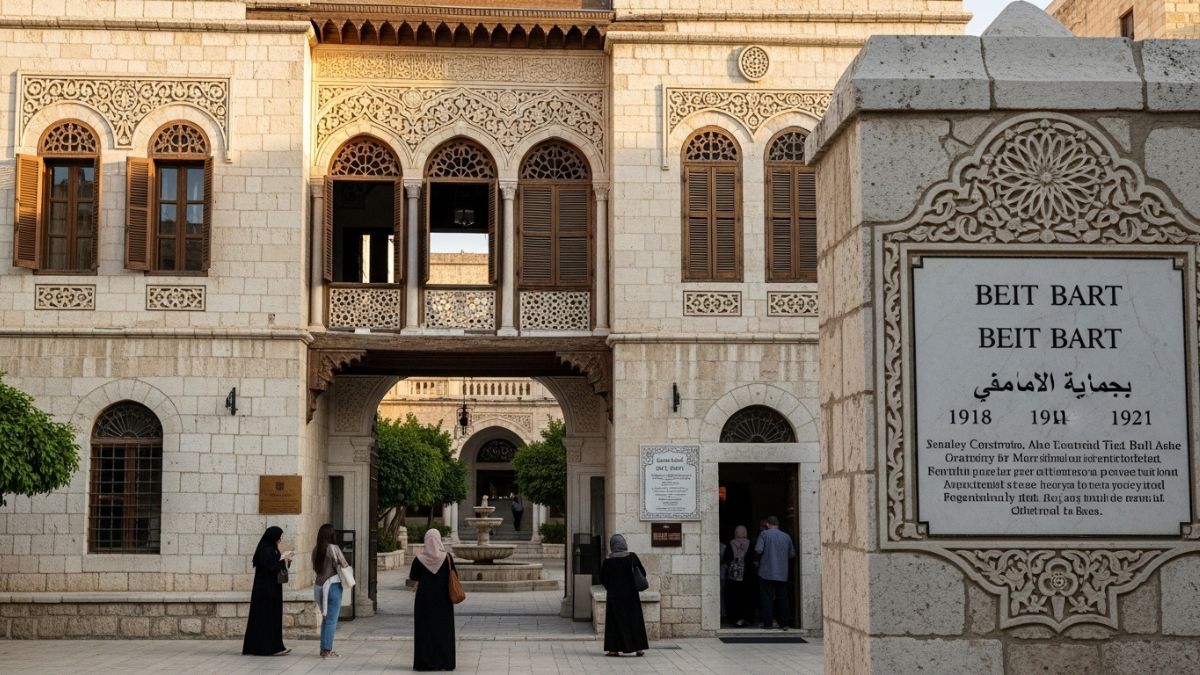
Beit Bart is a term that carries cultural, historical, and architectural importance. While the phrase may appear simple, Beit Bart represents far more than just a physical structure. In many contexts, Beit Bart refers to a house or building associated with heritage, identity, and community traditions. Understanding Beit Bart requires looking at its linguistic roots, historical background, and architectural features.
The word “Beit” commonly translates to “house” in several Semitic languages, and when combined with “Bart,” the phrase Beit Bart suggests a place connected to a family name, historical figure, or cultural identity. Whether interpreted as a historical residence, a landmark, or a symbolic home, Beit Bart reflects continuity, belonging, and legacy.
In this article, we will explore the origins, architectural characteristics, historical relevance, and cultural symbolism of Beit Bart in detail.
The Meaning and Linguistic Roots of Beit Bart
The phrase Beit Bart can be understood by analyzing its two components. “Beit” means house or dwelling place. It often appears in historical and religious contexts, referring to a physical building or a sacred site. “Bart” may refer to a surname, a shortened personal name, or a historical designation.
Linguistic Breakdown of Beit Bart
| Term | Meaning | Cultural Context |
|---|---|---|
| Beit | House, home, dwelling | Used in historical and religious naming traditions |
| Bart | Personal or family identifier | Represents lineage or association |
| Beit Bart | House of Bart | Symbol of identity and heritage |
In many traditions, naming a building after a family or individual reflects honor, legacy, and historical contribution. Beit Bart, therefore, can represent a house that preserves memory and significance.
Historical Background of Beit Bart
The historical significance of Beit Bart depends on regional and cultural context. In many areas, homes bearing the name “Beit” were constructed to represent family prominence or communal leadership. Beit Bart may have originally been a residence belonging to a respected individual or lineage.
Historically, such houses often served multiple purposes:
-
Family residence
-
Gathering place
-
Administrative center
-
Cultural meeting point
Over time, Beit Bart may have transformed from a private dwelling into a landmark associated with collective memory. In many cultures, buildings with specific names become part of oral tradition and local storytelling.
Architectural Features of Beit Bart
Architecture plays a central role in understanding Beit Bart. Traditional houses named with the prefix “Beit” often share distinctive design elements influenced by climate, materials, and regional style.
Structural Characteristics of Beit Bart
| Architectural Element | Description | Purpose |
|---|---|---|
| Central Courtyard | Open-air inner space | Ventilation and family gatherings |
| Thick Stone Walls | Locally sourced materials | Temperature regulation |
| Arched Doorways | Decorative structural arches | Aesthetic and stability |
| Flat or Tiled Roof | Climate-adapted roofing | Weather protection |
The design of Beit Bart may include stone masonry, carved wooden doors, and interior courtyards. These elements highlight both functionality and artistry. The architecture often balances durability with visual appeal.
In regions with hot climates, thick stone walls help maintain cooler indoor temperatures. Courtyards provide light and airflow, while shaded walkways protect residents from intense sunlight.
Cultural Significance of Beit Bart
Beit Bart is more than a structure; it often symbolizes family continuity and communal belonging. Buildings like Beit Bart are frequently associated with tradition, rituals, and shared experiences.
In some contexts, may serve as:
-
A heritage site
-
A preserved ancestral home
-
A cultural gathering space
-
A symbol of identity
When families maintain named houses for generations, the building becomes a physical representation of memory. Celebrations, discussions, and historical decisions may have taken place within its walls.
The importance of lies in its connection to people rather than just its physical presence.
Beit Bart in Community Life
Throughout history, houses with meaningful names often functioned as centers of activity. may have hosted community meetings, educational sessions, or family events.
Community Functions of Beit Bart
| Function | Role in Society |
|---|---|
| Family Events | Weddings, gatherings, celebrations |
| Social Meetings | Discussions and conflict resolution |
| Cultural Preservation | Passing down stories and traditions |
| Hospitality | Welcoming guests and travelers |
Such buildings reinforce social bonds. The continuity of across generations strengthens collective identity.
Preservation and Restoration of Beit Bart
Historic buildings require preservation to maintain their integrity. If is considered a heritage property, restoration efforts focus on protecting original materials and architectural details.
Restoration may involve:
-
Repairing stonework
-
Preserving wooden carvings
-
Reinforcing structural foundations
-
Documenting historical records
Preservation ensures that continues to serve as a living memory rather than becoming forgotten history.
Modern restoration techniques aim to retain authenticity while incorporating safety improvements. This balance allows to remain both functional and historically accurate.
Symbolism and Identity in Beit Bart
Symbolism plays a powerful role in the meaning of . A named house often represents dignity, continuity, and resilience. In many cultures, the home is central to identity.
can symbolize:
-
Stability
-
Heritage
-
Respect for ancestors
-
Cultural pride
The name itself gives personality to the structure. It transforms a building into a narrative space filled with memory and emotion.
Architectural Evolution of Beit Bart
Over time, may have undergone changes reflecting social and technological developments. Early versions might have been modest stone dwellings, while later modifications introduced modern materials.
Evolution of Beit Bart Over Time
| Period | Architectural Style | Notable Changes |
|---|---|---|
| Early Construction | Traditional stone masonry | Basic layout, minimal ornamentation |
| Transitional Phase | Expanded rooms | Decorative details added |
| Modern Restoration | Reinforced structure | Improved utilities and safety measures |
Such evolution demonstrates adaptability while preserving core identity. remains rooted in tradition even as it embraces contemporary needs.
The Emotional Connection to Beit Bart
Beyond history and architecture, holds emotional meaning. Homes often carry memories of laughter, celebration, and shared hardship. When a building carries a name like , it becomes a guardian of personal stories.
People who have lived or gathered in may associate it with childhood memories, family unity, or significant milestones. The physical walls hold invisible layers of experience.
This emotional dimension deepens the value of beyond its structural form.
Modern Relevance of Beit Bart
In today’s fast-changing world, named heritage houses like remind communities of their roots. Urbanization often replaces traditional architecture with modern buildings, making preservation increasingly important.
can inspire:
-
Architectural conservation efforts
-
Cultural education initiatives
-
Heritage tourism opportunities
-
Community engagement projects
As societies grow more globalized, landmarks such as provide grounding and continuity.
Educational Importance of Beit Bart
Educational institutions sometimes use historical homes as learning spaces. could serve as a site for teaching history, architecture, or cultural studies.
Students may study:
-
Traditional construction techniques
-
Historical family lineage
-
Community development patterns
-
Cultural symbolism in architecture
By preserving , communities ensure that future generations understand their past.
Challenges Facing Beit Bart
Despite its value, may face several challenges:
-
Environmental wear
-
Urban expansion
-
Lack of funding for preservation
-
Structural aging
Addressing these challenges requires collaboration between community members, historians, and conservation specialists.
Without proper care, historic buildings risk deterioration. Proactive preservation keeps relevant and protected.
Why Beit Bart Matters Today
matters because it connects people to identity and memory. In a world focused on innovation, historical structures offer balance and perspective.
The endurance of demonstrates resilience. It stands as proof that architecture can preserve not only space but also meaning.
Whether viewed as a physical house, a historical landmark, or a cultural symbol, represents continuity and belonging.
Conclusion
is far more than a simple phrase. It embodies history, architecture, identity, and community. From its linguistic roots to its architectural features, reflects tradition and continuity. Its preservation ensures that cultural memory remains alive for generations to come.
Understanding means recognizing the powerful role that named homes play in shaping collective identity. Through restoration, education, and appreciation, continues to inspire respect for heritage and the enduring importance of home.
By exploring its meaning, historical depth, and symbolic value, we gain insight into how structures like contribute to cultural richness and social cohesion.