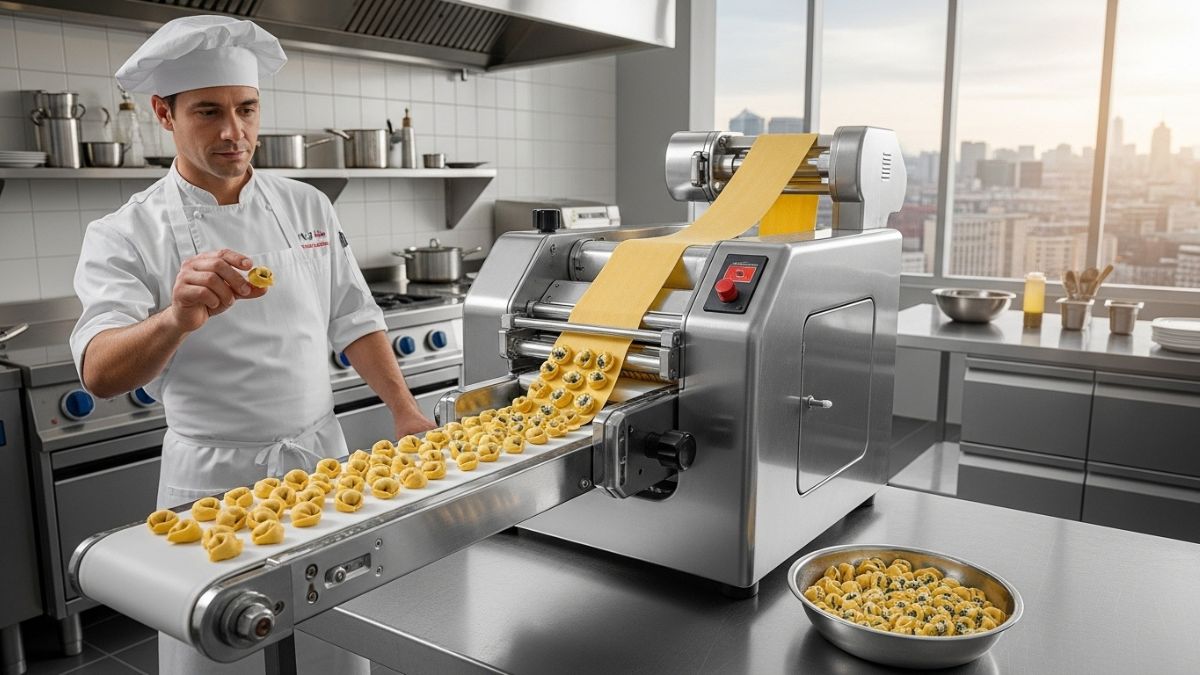
Tortellinatrice is a specialized machine designed to automate and perfect the production of tortellini, one of Italy’s most beloved stuffed pasta varieties. In professional kitchens and industrial pasta factories alike, the tortellinatrice has transformed traditional methods into efficient, high-precision processes. While handmade tortellini remains a cherished culinary art, the tortellinatrice bridges craftsmanship and technology, allowing chefs and manufacturers to maintain quality while increasing output.
As global demand for authentic Italian cuisine grows, the tortellinatrice plays a crucial role in maintaining consistency, speed, and hygiene standards. From small artisan workshops to large-scale food production facilities, this machine has become an essential component in modern pasta manufacturing. This article explores the origins, functionality, advantages, market applications, and future potential of the tortellinatrice while maintaining optimized keyword usage and readability.
The Origin and Evolution of Tortellinatrice
Historical Background of Tortellinatrice Development
The idea behind the tortellinatrice emerged from the need to preserve traditional tortellini shapes while reducing manual labor. Tortellini, typically filled with meat, cheese, or vegetables, require careful folding and sealing. Before automation, this process was entirely handmade and time-consuming.
As pasta consumption expanded internationally, manufacturers required a solution that maintained authenticity without sacrificing efficiency. The tortellinatrice was developed to replicate the delicate folding motion traditionally done by skilled artisans.
| Period | Production Method | Efficiency Level |
|---|---|---|
| Pre-industrial era | Handmade tortellini | Low |
| Early mechanization | Semi-automatic tools | Moderate |
| Modern era | Full tortellinatrice systems | High |
This progression demonstrates how innovation shaped pasta production while respecting culinary heritage.
Technological Advancements in Tortellinatrice Design
Modern tortellinatrice machines incorporate advanced engineering. Stainless steel construction ensures hygiene, while programmable controls allow precise dough thickness and filling quantity adjustments. These technological features make the tortellinatrice adaptable to various recipes and production scales.
How Tortellinatrice Works in Pasta Production
Core Mechanism of Tortellinatrice
The tortellinatrice operates by feeding pasta dough sheets into a shaping system. Simultaneously, filling is injected into evenly spaced portions. The machine then folds, seals, and cuts each piece into the recognizable tortellini ring shape.
The process typically includes the following stages:
Dough rolling
Filling distribution
Shaping and folding
Cutting and sealing
Each step is synchronized to ensure uniform quality.
Components of a Standard Tortellinatrice
Understanding the components of a tortellinatrice helps businesses evaluate its functionality.
| Component | Function | Importance |
|---|---|---|
| Dough rollers | Flatten dough evenly | Ensures consistent thickness |
| Filling injector | Distributes filling | Controls portion accuracy |
| Shaping molds | Forms tortellini shape | Maintains authenticity |
| Cutting unit | Separates pieces | Precision finishing |
| Control panel | Adjusts settings | Customization and safety |
This integrated system allows the tortellinatrice to replicate traditional craftsmanship at scale.
Benefits of Using Tortellinatrice
Efficiency and Productivity Gains with Tortellinatrice
One of the primary advantages of the tortellinatrice is speed. A single machine can produce thousands of tortellini pieces per hour, dramatically surpassing manual methods. This efficiency reduces labor costs while increasing overall productivity.
Additionally, consistent shaping enhances product presentation. Uniform tortellini pieces improve packaging appeal and customer satisfaction.
Quality Control and Hygiene in Tortellinatrice Systems
Food safety is critical in modern manufacturing. The tortellinatrice is typically constructed from food-grade materials that meet international hygiene standards. Automated production reduces direct human contact, minimizing contamination risks.
Consistency in portion control also ensures that every tortellini piece meets the same quality expectations, strengthening brand trust.Tortellinatrice in Commercial and Artisan Kitchens
Industrial Applications of Tortellinatrice
Large-scale food manufacturers rely heavily on the tortellinatrice for mass production. Supermarkets and export businesses demand high-volume output without compromising quality.
Industrial tortellinatrice models often include automated conveyor systems and packaging integration. This allows seamless transitions from production to storage.
Small-Scale and Artisan Use of Tortellinatrice
Artisan pasta makers also benefit from compact tortellinatrice models. These machines support small businesses by preserving authenticity while reducing manual strain.
| Business Type | Tortellinatrice Size | Production Capacity |
|---|---|---|
| Home-based | Compact manual | Low to moderate |
| Artisan shop | Semi-automatic | Moderate |
| Industrial plant | Fully automatic | High |
This flexibility makes the tortellinatrice accessible across various business scales.
Economic Impact of Tortellinatrice
Cost Efficiency of Tortellinatrice Investment
Although purchasing a tortellinatrice requires initial capital, long-term savings often outweigh costs. Reduced labor expenses and higher output increase profitability.
Businesses can calculate return on investment by comparing manual labor costs with automated production capacity.
Market Demand Supporting Tortellinatrice Growth
The global popularity of Italian cuisine continues to grow. Ready-to-cook pasta products are widely distributed in international markets. This demand fuels expansion in tortellinatrice manufacturing and innovation.
Maintenance and Operational Best Practices for Tortellinatrice
Routine Maintenance of Tortellinatrice
Proper cleaning and inspection extend the lifespan of a tortellinatrice. Operators should regularly check rollers, filling systems, and molds for wear. Scheduled maintenance prevents downtime and preserves production quality.
Training Requirements for Tortellinatrice Operators
Although automated, the tortellinatrice requires trained operators to adjust settings and monitor performance. Staff training ensures safe operation and optimal results.
Innovation Trends in Tortellinatrice Technology
Smart Automation in Tortellinatrice Systems
Emerging models of tortellinatrice integrate digital controls and smart sensors. These technologies monitor dough consistency, filling distribution, and mechanical alignment in real time.
Digital connectivity allows performance tracking and predictive maintenance, reducing operational disruptions.
Sustainability and Energy Efficiency in Tortellinatrice
Energy-efficient designs are increasingly important. Modern tortellinatrice machines aim to reduce power consumption while maintaining output levels. Sustainable materials and optimized motor systems contribute to environmentally responsible manufacturing.
| Innovation Feature | Benefit |
|---|---|
| Smart sensors | Improved precision |
| Energy-saving motors | Reduced costs |
| Digital controls | Enhanced customization |
| Hygienic design | Food safety compliance |
These innovations position the tortellinatrice as a forward-looking solution.
Comparing Handmade Production and Tortellinatrice Output
Handmade tortellini carries emotional and cultural value. However, scaling handmade production is challenging. The tortellinatrice balances tradition and efficiency.
While artisanal methods emphasize craftsmanship, automated systems focus on consistency and commercial viability. Many businesses adopt hybrid approaches, using tortellinatrice technology while preserving traditional recipes.
Future Outlook for Tortellinatrice
The future of the tortellinatrice appears promising. As consumer demand for authentic yet affordable pasta increases, automated solutions will remain essential.
Technological advancements may further refine shaping precision and customization capabilities. With global food markets expanding, the will likely become even more central to pasta production.
Manufacturers that invest in innovation, hygiene, and sustainability will maintain competitive advantage in this evolving sector.
Conclusion
Tortellinatrice represents the intersection of culinary tradition and technological advancement. From its historical origins in manual pasta making to its modern role in automated production, the has transformed how tortellini is crafted and distributed worldwide.
By improving efficiency, maintaining consistent quality, and meeting strict hygiene standards, the supports both industrial manufacturers and artisan producers. As technology continues to evolve, this machine will remain a vital tool in the global pasta industry.
Understanding the functionality, benefits, and future potential of the tortellinatrice allows businesses to make informed decisions and embrace innovation without sacrificing authenticity.